Watercolor Maine Clipart, Portland PNG: Coastal Charm for Your Projects
There's a particular quality to the Maine coastline—a blend of rugged authenticity and soft, natural beauty that's hard to capture. This collection of Watercolor Maine Clipart, including the versatile Portland PNG, manages to bottle that feeling. It’s not just a set of digital assets; it’s a mood, a texture, and a visual shorthand for coastal New England. For designers, crafters, and brand builders, this means having a tool that does more than decorate—it communicates a distinct personality.
Understanding the Visual Language of the Clipart
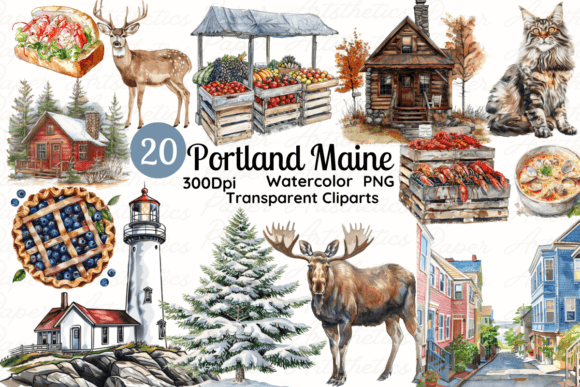
At its core, this is a premium clipart set rooted in a modern watercolor aesthetic. The lines are organic and slightly imperfect, mimicking the natural flow of pigment on paper. You’ll find the iconic Portland Head Light rendered with soft washes of color, alongside other Maine-inspired motifs like lighthouses, sailboats, and coastal flora. The style strikes a perfect balance: it feels handcrafted and artistic, yet clean enough for professional use. The transparent PNG format is crucial here, allowing each element to float seamlessly over any background, whether it's a textured digital paper, a solid brand color, or a photograph. This makes the Watercolor Maine Clipart a genuinely flexible design asset, far more useful than a static, pre-composed image.
The personality of this set is warm, nostalgic, and subtly sophisticated. It avoids the trap of being overly kitschy or touristy. Instead, it leans into a refined, artistic interpretation of coastal life. This makes it suitable for projects that need to evoke trust, heritage, and a connection to nature without feeling outdated. Think of it as a typeface for imagery: just as a serif font can convey tradition, these watercolor elements convey artisanal quality and a relaxed, confident sensibility.
Strategic Applications: Beyond Simple Decoration
The real value of Watercolor Maine Clipart, Portland PNG, lies in its strategic application across different media. For small business owners and entrepreneurs, particularly those in lifestyle, food, travel, or home décor, these assets can become a cornerstone of brand identity. Imagine a boutique inn in Portland using the lighthouse PNG as a recurring motif on their website, reservation confirmations, and room key cards. This creates instant recognition and reinforces their location-based story. Similarly, a Maine-based jam company could use the coastal flora elements to design beautiful, cohesive packaging labels that stand out on a shelf.
For content creators and marketers, this clipart set solves the constant need for fresh, on-brand social media graphics. A blogger focusing on travel or interior design could use the Portland PNG as a header image or a subtle watermark on Instagram stories, maintaining a consistent aesthetic across their feed. The high-resolution 300 DPI files ensure that graphics look crisp whether they’re viewed on a phone screen or printed as a promotional poster. In editorial design, these watercolor elements can break up long blocks of text in a magazine or e-book, adding visual interest without distracting from the content. They work beautifully as spot illustrations in the margins or as subtle background textures behind pull quotes.
For the personal crafter and hobbyist, the applications are equally rich. The set is perfect for scrapbooking a vacation to Maine, creating personalized stationery for a friend, or designing custom wrapping paper for a gift. The ability to layer these PNGs over different backgrounds allows for endless experimentation. You could place a sailboat over a vintage map texture or arrange a cluster of coastal flowers around a photo in a digital planner. The key is to treat these elements as part of a larger design system, not just isolated stickers.
Making It Work: Practical Integration Tips
Integrating any new design asset effectively requires a bit of thought. First, consider the visual hierarchy. These watercolor elements are detailed and eye-catching, so they often work best as supporting actors rather than the main headline. Use them to frame key information, guide the viewer's eye, or add a touch of personality to a secondary element like a sidebar or a footer. Pairing them with clean, simple typography is a classic move. A bold sans serif font for headlines lets the clipart provide the artistic flair, while a clean serif font for body copy ensures readability.
Color coordination is another practical consideration. While the clipart has its own palette, you can often adjust its appearance slightly by overlaying it with a color wash or using blend modes in design software. More importantly, pull accent colors from the clipart itself to use in your text, buttons, or other graphic elements. This creates a harmonious and intentional look. If your project has a very specific brand color, test how the clipart looks against it. The transparent background makes this easy—you’re not locked into a fixed color scheme.
Finally, think about consistency. If you’re using the Portland Head Light in your logo, consider using a different element from the same set, like a sailboat or a seashell, for your social media icons or invoice design. This maintains a cohesive brand identity without being repetitive. The versatility of having 20 different PNG files in one ZIP download is a significant advantage, offering enough variety to keep designs fresh while ensuring all the elements speak the same visual language. By approaching the Watercolor Maine Clipart not just as decoration but as a strategic component of your visual communication, you can unlock its full potential to create projects that are not only beautiful but also memorable and effective.